
What is thyroid eye disease?
Thyroid eye disease can occur as a result of Graves’s disease, or hyperthyroidism and much less frequent as hypothyroidism. Infiltration of the muscles and tissues surrounding the eye can cause poor eye movement, proptosis, or bulging of the eyes, eyelid malpositioning, and visual loss. Patients can present with a single eyelid retraction, or mild proptosis, or have a dramatic change in their appearance, which can also be a sight-threatening disease if not treated correctly. Thyroid disease and other autoimmune diseases can be physically and emotionally debilitating to the patient.
How do you treat thyroid eye disease?
Management of patients with this disease is often multidisciplinary and includes endocrinologists, rheumatologists, internists, ophthalmologist, strabismus surgeons, and oculoplastic surgeons. Patients with mild eye symptoms may be monitored and treated with lubricating eye drops or ointment for comfort and oral supplements. Patients with severe sight-threatening progression of the disease often require high-dose steroid or other immunosuppression treatment, radiation therapy or surgery to decompress the eye and preserve sight.
For more information, visit www.asoprs.org
A recent development in the medical treatment for thyroid eye disease is the new FDA-approved medication, Tepezza (Teprotumumab). In early 2020, this mediation was FDA approved to treat thyroid eye disease with fewer side effects than currently available agents. Tepezza works by blocking the immune response of active thyroid eye disease by inhibiting IGF-IR and thyrotropin receptors. A recent phase 3 trial in 41 patients demonstrated improvement of proptosis (bulging of the eyes) of 2mm or more and reduction in diplopia (double vision), as well as an overall lower clinical activity score and improvement of QOL (quality of life).
Patients typically undergo eight intravenous infusions over 24 weeks. Side effects have been reported to be mild to moderate, including muscle spasms (32%), alopecia (20%), fatigue (12%) and diarrhea, headache (10%) and hyperglycemia. Monitoring is recommended.
Currently, it can take several weeks for approval of this medication for patients with a diagnosis of thyroid eye disease and proptosis. Dr. Amato and Dr. Somogyi can evaluate patients to see if they are eligible, then begin the approval process to institute treatment at an infusion center. She and her team coordinate care with eye doctors, endocrinologists, and rheumatologists to treat and safely monitor patients as she follows their ophthalmic response.
Contact Eyelid & Facial Plastic Surgery Associates today to see if you are eligible by calling 512-501-1010.
Tepezza Infussions
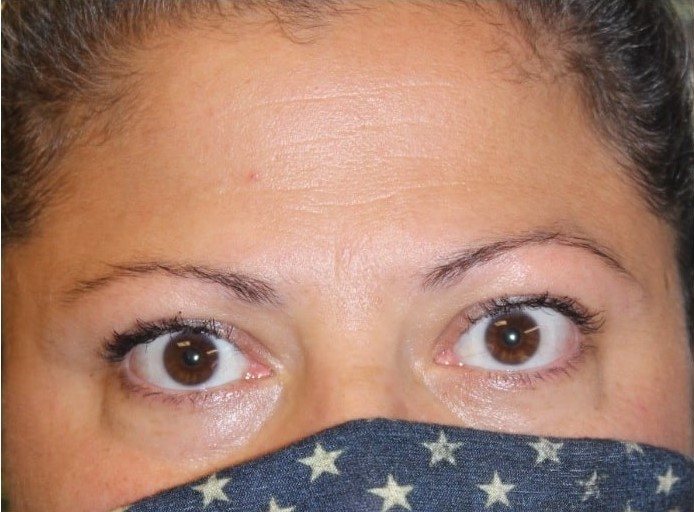
Before
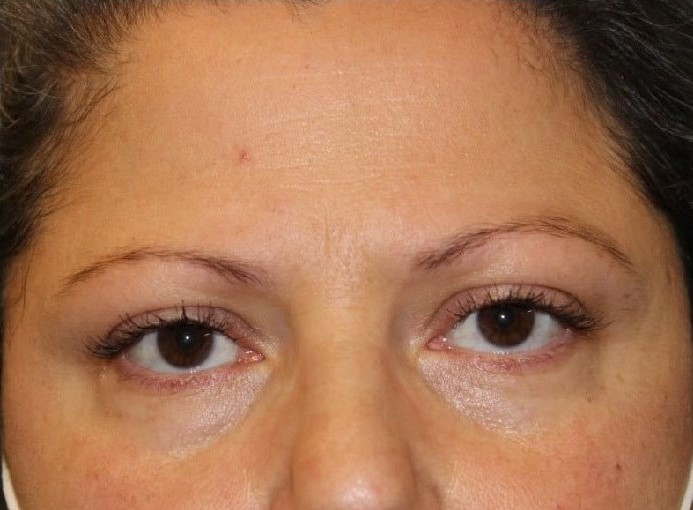
After